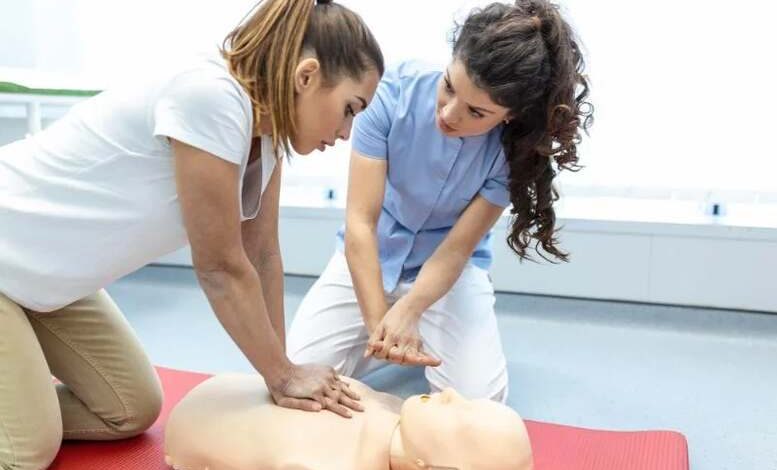
Imagine a busy hospital ward on an ordinary Tuesday morning. Nurses are checking vital signs, doctors are reviewing patient charts, and everyone is moving through their usual routine. Suddenly, a patient becomes unresponsive. Within seconds, the atmosphere changes. A medical emergency is unfolding, and there’s no time to search through old training notes.
In moments like these, healthcare professionals rely on more than their medical knowledge. They depend on skills they’ve practiced, refreshed, and committed to memory.


Cardiopulmonary resuscitation (CPR) is one of those skills. Although many healthcare workers learn CPR early in their careers, keeping that knowledge fresh is just as important as learning it in the first place.
Medical Emergencies Don’t Wait for a Refresher
Healthcare environments can change from calm to chaotic without warning. A patient recovering from surgery may suddenly deteriorate, or someone visiting a clinic could experience cardiac arrest.
When the heart stops pumping blood effectively, every second matters. CPR helps maintain some blood circulation until more advanced treatment becomes available.
Healthcare professionals must recognize cardiac arrest, activate the appropriate emergency response system, and begin high-quality CPR promptly.
However, knowing these steps in theory isn’t the same as performing them under pressure.
Regular training helps bridge that gap, allowing healthcare workers to respond with greater confidence when emergencies happen unexpectedly.
Skills Can Fade Without Practice
Think about the last time you learned something complicated but rarely used it afterward. Perhaps it was a foreign language, a technical procedure, or a difficult mathematical formula.
Without practice, even familiar information becomes harder to recall.
CPR skills are no different.
Healthcare workers who rarely encounter cardiac emergencies may gradually lose confidence in chest compression techniques, ventilation procedures, or AED operation.
Research on resuscitation education has shown that CPR knowledge and practical skills can decline within months of training.
That’s why refresher education matters.
Instead of treating certification as a one-time achievement, healthcare professionals should view CPR competence as an ongoing responsibility.
Options for cpr renewal for healthcare providers can help professionals revisit essential emergency response concepts and reinforce their knowledge. Hands-on practice and skills assessment remain important, particularly when required by employers or certifying organizations.
Good CPR Requires More Than Remembering the Steps
Many people associate CPR with chest compressions, but effective resuscitation involves several important details.
Compression depth, rate, chest recoil, and minimizing interruptions all influence CPR quality.
Healthcare providers may also need to coordinate rescue breathing, use bag-mask ventilation equipment, and work alongside colleagues during resuscitation.
These actions require both technical understanding and practical coordination.
During an emergency, even small delays or unnecessary interruptions can affect the delivery of high-quality CPR.
Regular practice helps healthcare workers become more familiar with equipment, maintain proper techniques, and recognize areas where improvement is needed.
The goal isn’t simply to remember what CPR looks like. It’s to perform it effectively when a patient’s life may depend on it.
Teamwork Can Make or Break an Emergency Response
A successful emergency response rarely depends on one person working alone.
In hospitals and other clinical settings, resuscitation often involves nurses, physicians, respiratory therapists, and additional emergency personnel.
Each team member has a responsibility, whether that’s performing compressions, managing the airway, operating a defibrillator, administering medications within their scope, or documenting events.
Without clear communication, even highly skilled professionals can struggle to coordinate their actions.
Simulation exercises and team-based CPR training help healthcare workers practice assigning roles, communicating clearly, and responding to changing circumstances.
These sessions also reveal problems that may go unnoticed during ordinary shifts.
A team that practices together is better positioned to work efficiently when an actual emergency occurs.
CPR Guidelines Continue to Evolve
Healthcare is constantly advancing. New research, updated recommendations, and improvements in medical equipment influence how professionals deliver emergency care.
CPR guidelines are periodically reviewed and updated to reflect the best available scientific evidence.
A technique learned several years ago may no longer represent current recommendations.
Continuing education helps healthcare professionals stay informed about changes in resuscitation practices and understand the reasoning behind them.
It also encourages a culture where learning doesn’t stop after graduation or initial certification.
For healthcare workers, staying updated isn’t simply about meeting professional requirements. It’s part of providing responsible, evidence-based patient care.
Confidence Comes From Being Prepared
Medical emergencies are stressful, even for experienced healthcare professionals.
The sudden sound of an alarm, concerned family members, and the urgency of a deteriorating patient can create intense pressure.
Training cannot eliminate stress completely, but familiarity with emergency procedures can make decision-making easier.
Repeated practice helps healthcare workers recognize situations faster, follow established protocols, and focus on the patient rather than trying to remember every step.
Confidence built through preparation is different from assuming you already know enough.
It comes from understanding your responsibilities and recognizing the importance of continuous improvement.
Keeping Skills Sharp Is Part of Patient Safety
Patients trust healthcare professionals to provide competent care, particularly during critical moments.
Maintaining CPR skills is one way healthcare workers honor that responsibility.
Regular refresher courses, practical simulations, and staying informed about updated guidelines all contribute to emergency readiness.
Whether someone works in a large hospital, dental clinic, nursing home, or community healthcare facility, cardiac emergencies can occur unexpectedly.
The most important time to improve CPR skills is before they’re urgently needed.
Because when a patient’s heart suddenly stops, yesterday’s training should never be the only thing standing between knowledge and action.
Read More: Ashley McBryde Wife Journey